
Best Handheld Gaming PCs 2026
Our top handheld gaming PC picks for 2026 across SteamOS and Windows, from budget-friendly Zen 3+ machines to full Zen 5 flagships.
The handheld gaming PC field split cleanly into two camps by 2026: SteamOS machines that prioritize battery life and polish, and Windows machines that trade some of that away for raw horsepower and open-platform flexibility. This is our cross-tier shortlist — the handhelds we'd actually recommend, whichever side of that split you land on.
At the SteamOS end, the Valve Steam Deck OLED remains the reference device, with the Lenovo Legion Go S as the value alternative once you flash it to SteamOS. On Windows, the ASUS ROG Ally X is the well-rounded all-rounder, the ROG Xbox Ally X is the current flagship, the Lenovo Legion Go 2 is the big-screen premium option, and the MSI Claw 8 AI+ is the efficiency champion thanks to Intel's Lunar Lake silicon.
What to look for
OS matters as much as the chip. The clearest data point in this category is the Legion Go S: identical hardware, but Notebookcheck measured the SteamOS build running faster, quieter and more efficiently than the Windows build. If you're comparing two handhelds with similar APUs, check which OS they ship with before you compare specs.
Battery capacity varies enormously. The original ROG Ally and Zotac Zone both run 40–48.5 Wh cells that struggle past 1.5–2 hours under full load, while the Ally X, Legion Go 2 and both MSI Claw 8-inch machines all pack 74–80 Wh batteries. If long sessions away from a wall outlet matter, check the Wh figure, not just the APU name.
Sticks and triggers. Hall-effect sensors resist the drift that plagues potentiometer sticks over time. The Legion Go S, Legion Go 2, MSI Claw line, Zotac Zone and Xbox Ally family (triggers only) all use Hall Effect; the original ROG Ally and ROG Ally X still use potentiometer sticks, a known wear point on the first-generation Ally.
Screen size and weight trade off directly. 7-inch machines (Steam Deck, Ally family, Zotac Zone) stay under 700 g; step up to the 8.8-inch Legion Go 2 and you're carrying 922 g. Neither is wrong — it's a genuine trade-off between screen real estate and hand fatigue on long sessions.
Which should you buy?
If you want the single most polished handheld regardless of OS, the Steam Deck OLED remains our overall pick — a 90 Hz HDR OLED, twin trackpads and suspend/resume nothing else in this list quite matches. If you want that same SteamOS polish on a bigger screen with Hall-effect sticks, the Legion Go S (SteamOS) is the standout, especially once you know the identical Windows chassis runs the same hardware worse.
For a well-rounded Windows machine, the ROG Ally X is the pick — 80 Wh battery, 24 GB RAM and USB4 in a chassis ASUS has clearly iterated on. Want the most power available on Windows? The ROG Xbox Ally X and Legion Go 2 both bring flagship-class Zen 5 silicon, with the Xbox Ally X the lighter and cheaper of the two, and the Legion Go 2 winning on screen quality if you don't mind the extra weight. And if battery efficiency is your top priority, the MSI Claw 8 AI+ is the one to beat.
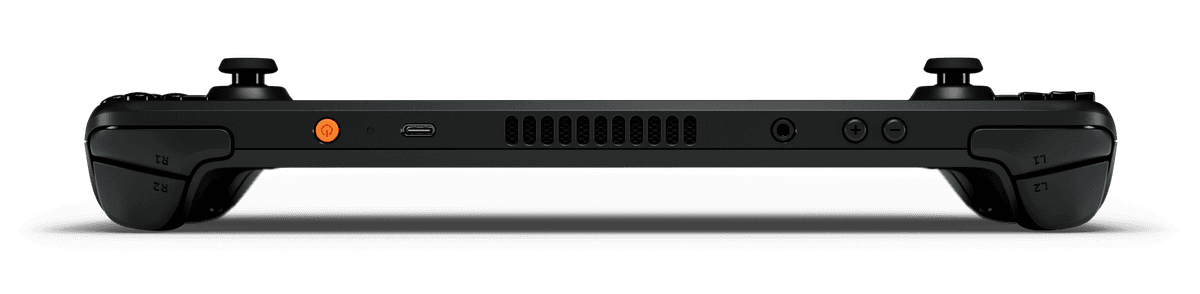
- 1Valve Steam Deck OLED
from $789
SteamOS7.4" OLED640 g50 WhOur overall pick: a gorgeous 90 Hz HDR OLED, twin haptic trackpads and the most polished suspend/resume of any handheld. The Zen 2/RDNA 2 APU is unchanged from the LCD model, so it's not the fastest chip here, but nothing else feels this finished.
- 2Lenovo Legion Go S (SteamOS)
from $900
SteamOS8" IPS736 g55.5 WhThe value pick — the same chassis as the Windows Legion Go S, but Notebookcheck measured it running significantly faster, quieter and more efficiently once SteamOS replaces Windows. Hall-effect sticks and triggers, and it runs the same hardware more efficiently than the Windows version.
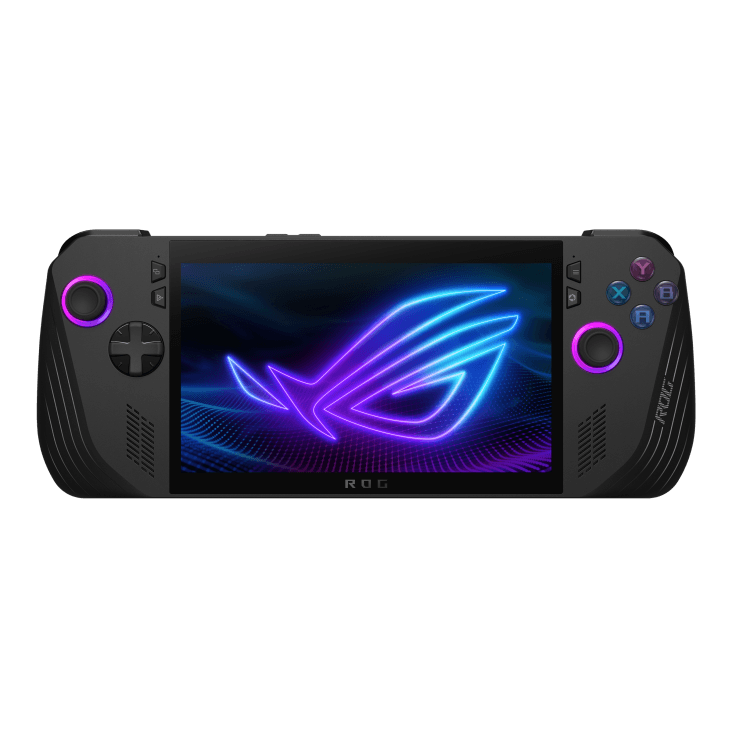
- 3ASUS ROG Ally X
from $800
Windows 117" IPS685 g80 WhThe Windows all-rounder: an 80 Wh battery (roughly double the original Ally), 24 GB of RAM, a 1 TB SSD and USB4/Thunderbolt. Sticks are still potentiometer rather than Hall Effect, and Windows suspend/resume still adds friction.
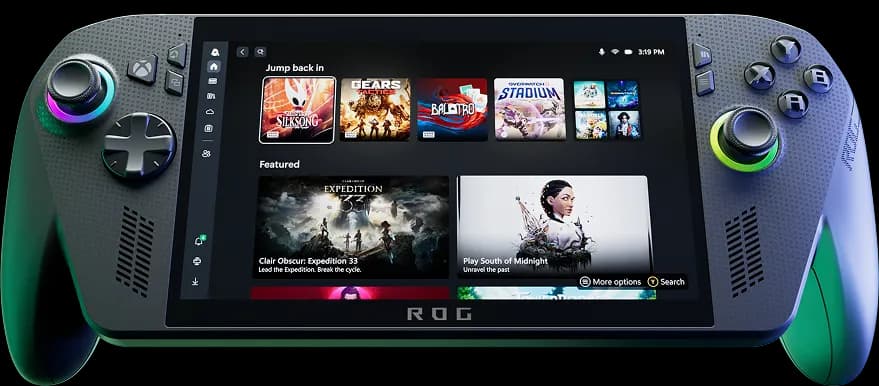
- 4ASUS ROG Xbox Ally X
from $1,000
Windows 117" IPS715 g80 WhThe Windows flagship: a Zen 5 / RDNA 3.5 Ryzen AI Z2 Extreme with 16 CUs, 24 GB RAM, an 80 Wh battery and USB4 with XG Mobile eGPU support, fronted by the Xbox Full Screen Experience that smooths over a lot of the usual Windows friction. It's heavy at 715 g and the panel is still 1080p IPS.
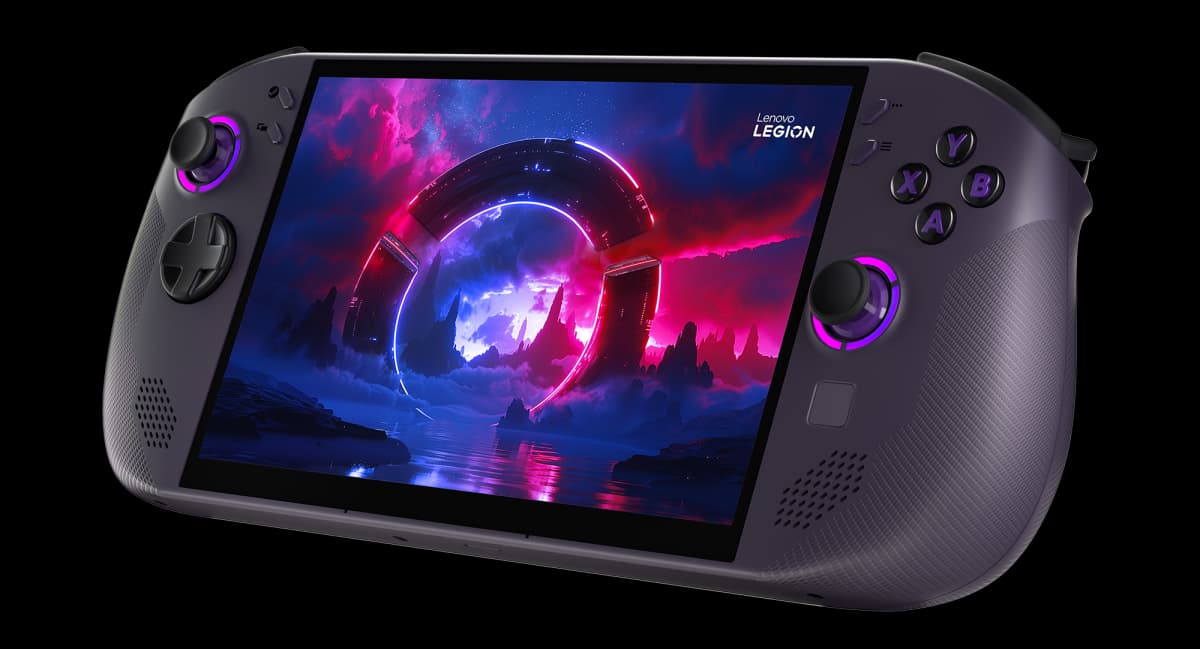
- 5Lenovo Legion Go 2
from $1,100
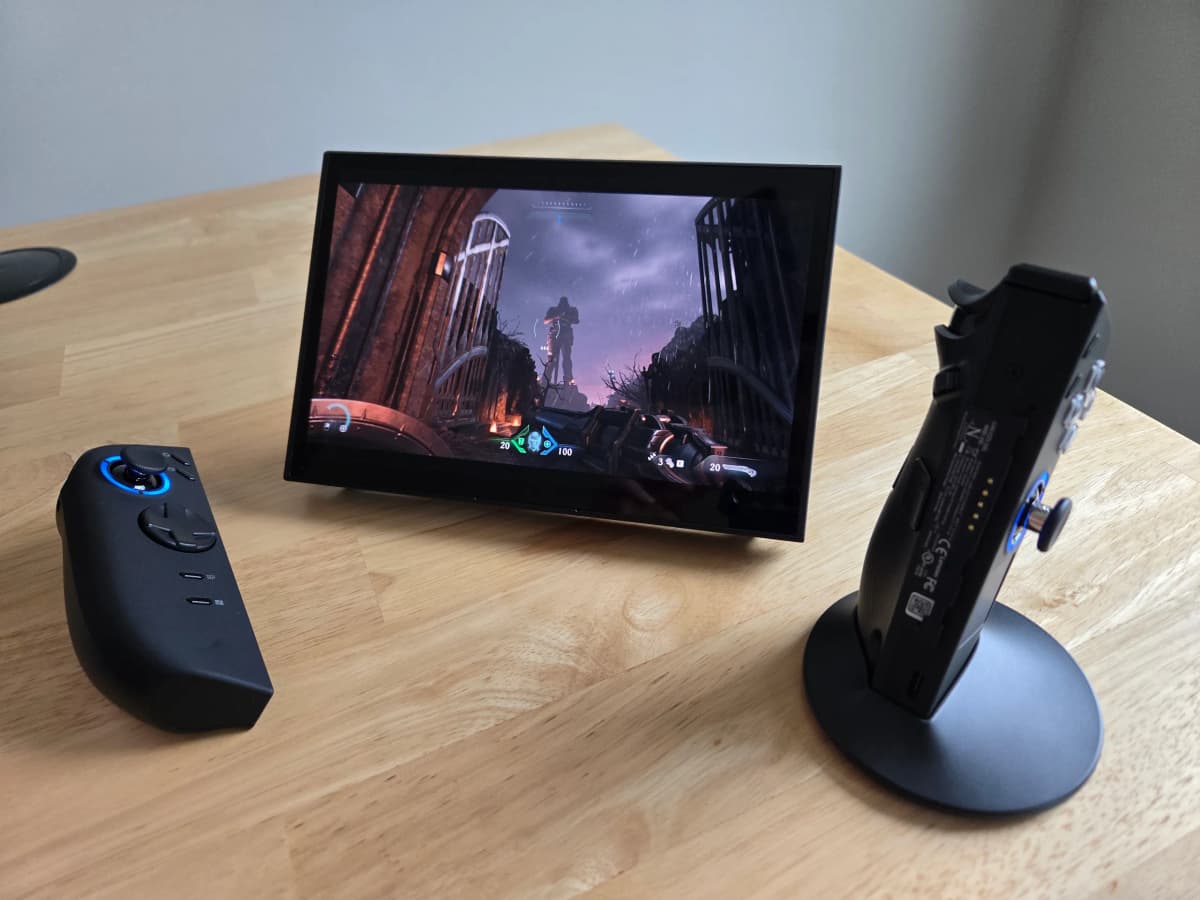
Windows 118.8" OLED922 g74 WhThe big-screen flagship: an 8.8-inch 144 Hz OLED with VRR, a 74 Wh battery and detachable controllers with a kickstand. It's also the most expensive and heaviest handheld on this list at 922 g, and early units reported Windows 11 sleep drain.
- 6MSI Claw 8 AI+
from $1,119
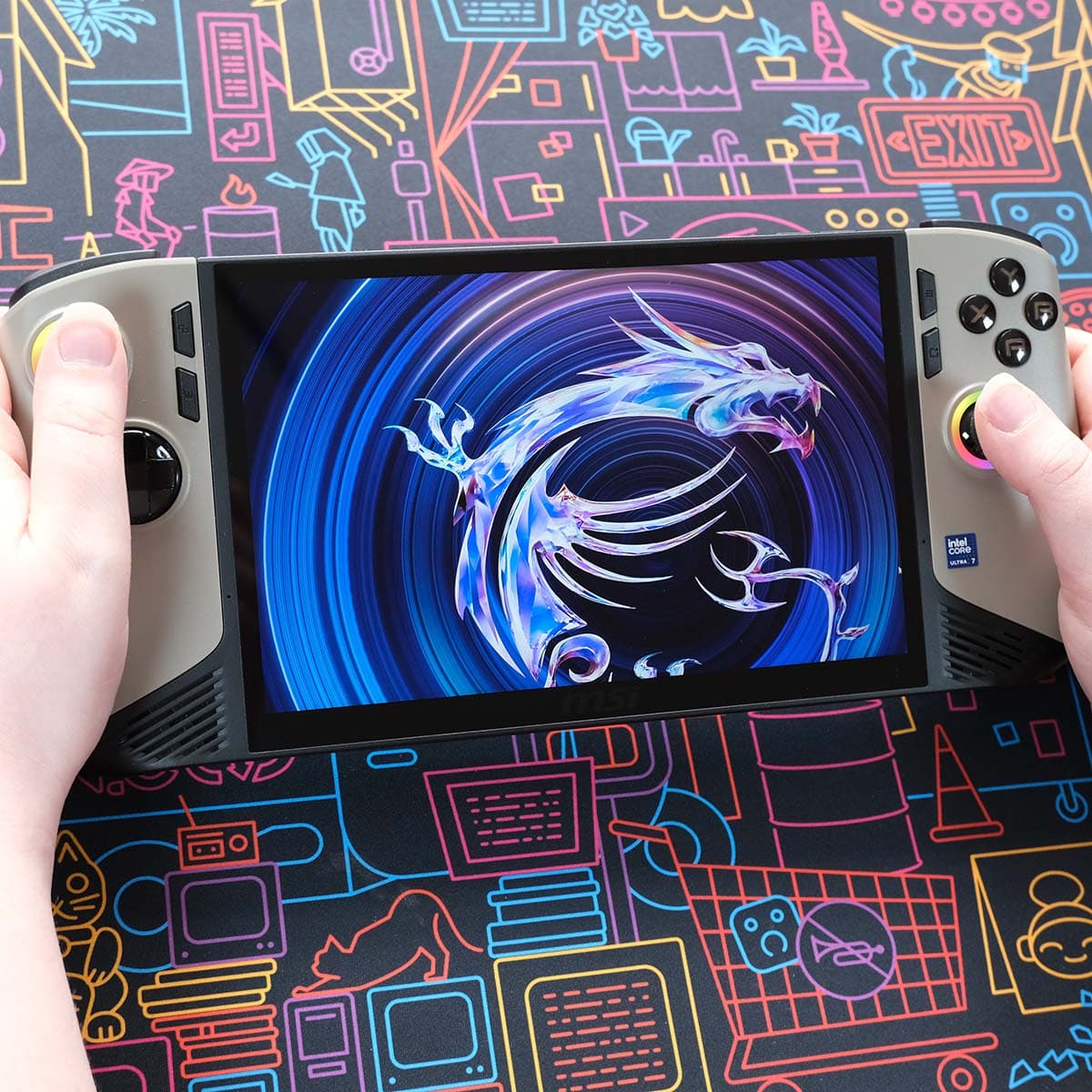
Windows 118" IPS793 g80 WhThe efficiency pick — Intel's Lunar Lake Core Ultra 7 258V let Notebookcheck call this the best gaming handheld on the strength of its battery life alone (~5–6 hours balanced from an 80 Wh cell). The MSI Center M software and AI power profiles are still rough around the edges.
Handheld prices are unusually volatile in 2026 due to a global memory-chip shortage — we show the best figure at our last check, but always confirm the live price at the retailer.
FAQ
What is the best handheld gaming PC overall in 2026?
The Valve Steam Deck OLED is our overall pick: a 90 Hz HDR OLED screen, twin haptic trackpads and SteamOS's excellent suspend/resume, all on a mature and well-supported platform. It uses the same Zen 2/RDNA 2 APU as the original LCD Deck, so raw power isn't its selling point — polish is.
What's the best value handheld gaming PC?
The Lenovo Legion Go S running SteamOS. It's the same hardware as the Windows Legion Go S, but Notebookcheck found the SteamOS build ran markedly faster, quieter and more efficiently — proof that the OS matters as much as the silicon on this class of device.
Should I get a SteamOS or a Windows handheld?
SteamOS handhelds (Steam Deck, Legion Go S SteamOS) generally deliver better battery life and smoother suspend/resume on the same hardware. Windows handhelds (ROG Ally X, Xbox Ally X, Legion Go 2) trade some of that polish for access to any PC storefront, Game Pass, and higher-wattage APUs like the Z2 Extreme and Ryzen AI Z2 Extreme.
Is a bigger screen worth the extra weight?
It depends on your priorities. The 8.8-inch Legion Go 2 has one of the best panels in the category — a 144 Hz OLED with VRR — but it weighs 922 g and costs $1,099.99 and up. The 7- and 8-inch handhelds on this list are all lighter and cheaper, so the Legion Go 2 only makes sense if screen quality and size are non-negotiable for you.