
Best OLED Handheld Gaming PCs 2026
Every handheld in our 2026 database with an OLED or AMOLED panel, compared on brightness, refresh rate and the trade-offs each one makes elsewhere.
OLED panels are the clearest screen upgrade in the handheld category — deeper blacks, wider color coverage and (on most of these) meaningfully higher brightness than the IPS and LCD panels that still dominate the market. Here's every OLED (or AMOLED) handheld in our 2026 database, compared honestly on what each one gets right and where it compromises.
The Steam Deck OLED remains the best all-around package. The Lenovo Legion Go 2 has the highest refresh rate and biggest screen. The Zotac Zone is the Windows outlier with SteamOS-style trackpads. And the AYANEO 3 is the boutique option that adds OCuLink to the mix.
What to look for
Refresh rate and brightness both matter, and they don't always come together. The Legion Go 2 leads on refresh rate at 144 Hz; the Steam Deck OLED leads on peak HDR brightness at 1000 nits. Neither wins on both — pick based on whether motion clarity or HDR punch matters more to your games.
Battery capacity varies a lot even among OLED handhelds. The Steam Deck OLED (50 Wh) and Legion Go 2 (74 Wh) both deliver solid runtime; the Zotac Zone's 48.5 Wh cell is noticeably smaller and reviewers consistently cite it as a weak point.
Trackpads are a genuine differentiator among OLED handhelds. Only the Steam Deck OLED and Zotac Zone have them (the Legion Go 2 has a single smaller touchpad on its right controller); the AYANEO 3 skips them entirely in favor of a more traditional stick-and-button layout.
Price and weight scale with screen size and features. The 7-inch OLED handhelds (Deck, Zotac Zone, AYANEO 3) all sit under 700 g; the 8.8-inch Legion Go 2 jumps to 922 g and a four-figure starting price.
Which should you buy?
For most people, the Steam Deck OLED is still the best OLED handheld overall — the brightness, color coverage and SteamOS polish are hard to beat, and the 50 Wh battery holds up well against the competition. If you want the sharpest, highest-refresh screen and don't mind the size and cost, the Legion Go 2 is the one to get.
If you're on Windows and miss trackpads, the Zotac Zone is the only option here that has them — just plan around its shorter battery life. And if OCuLink external-GPU support matters to you more than trackpads, the AYANEO 3 packs a 144 Hz OLED into a more affordable, boutique-flavored package.
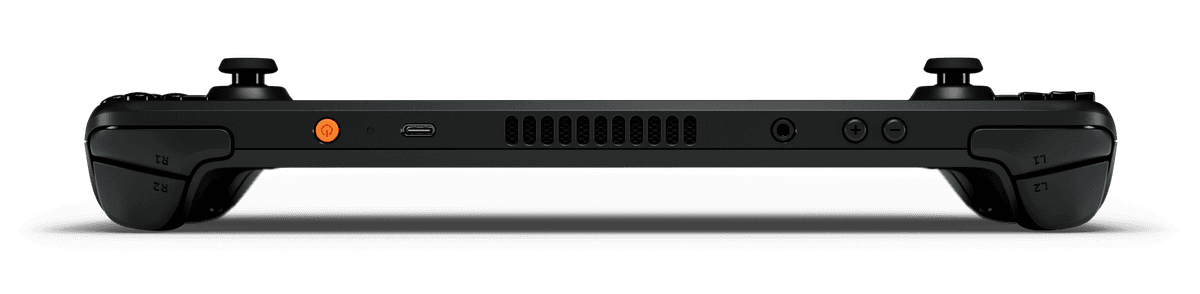
- 1Valve Steam Deck OLED
from $789
SteamOS7.4" OLED640 g50 WhThe reference OLED handheld: a 90 Hz panel hitting 1000 nits in HDR (600 nits SDR) with 110% P3 coverage, paired with SteamOS's mature suspend/resume and a 50 Wh battery. It's not the highest refresh rate here, but the overall package is the most polished.
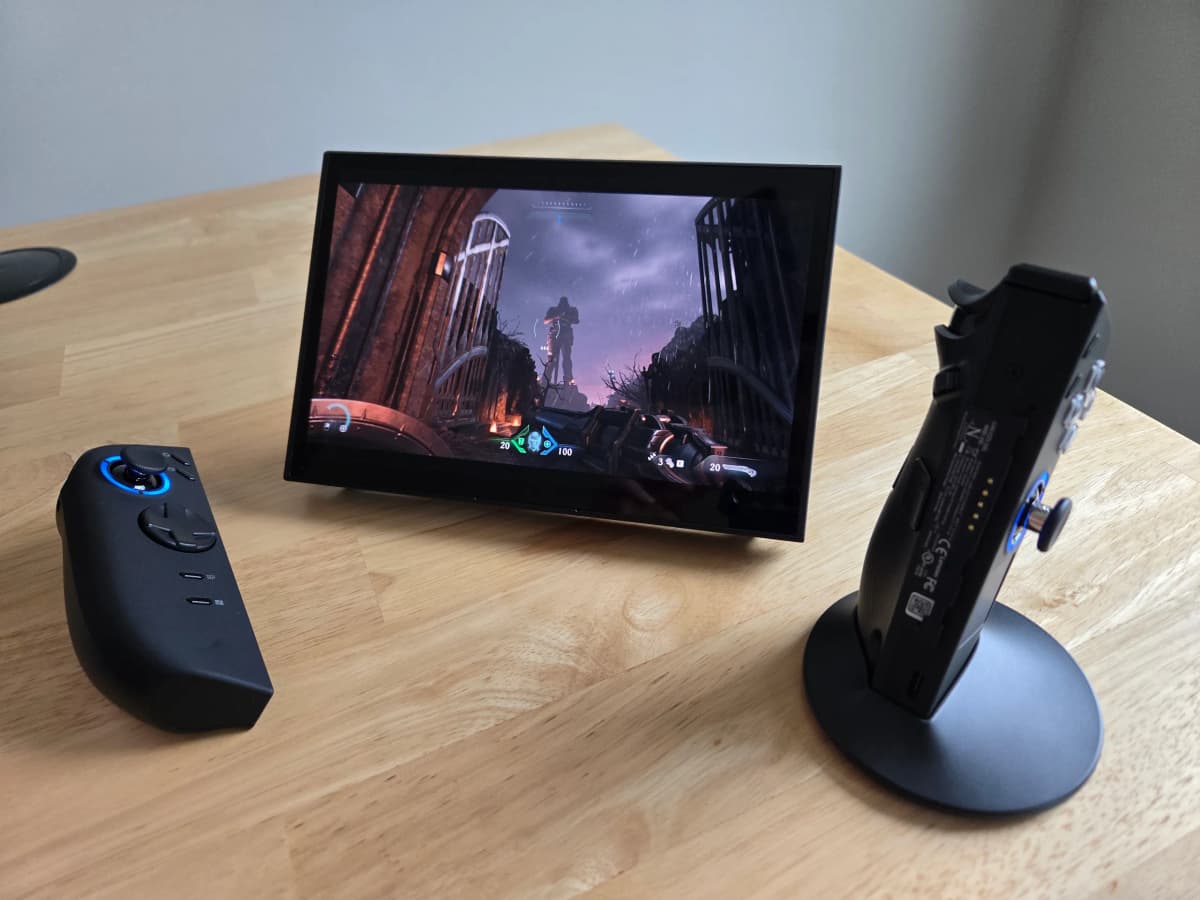
- 2Lenovo Legion Go 2
from $1,100
Windows 118.8" OLED922 g74 WhThe highest refresh rate of the group at 144 Hz, with VRR support and 97% DCI-P3 coverage (VESA TrueBlack 1000) across an 8.8-inch panel — the biggest OLED screen on this list. It comes with the trade-offs of a 922 g weight and a $1,099.99-plus starting price.
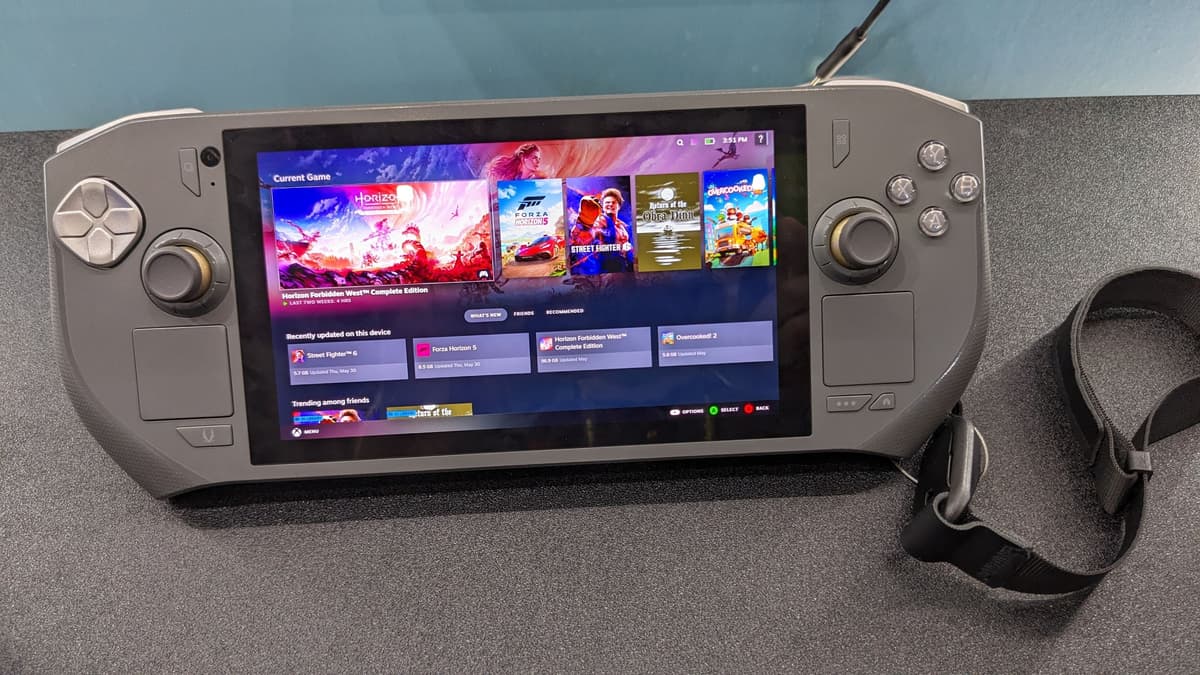
- 3Zotac Zone
from $799
Windows 117" OLED692 g48.5 WhA 7-inch 1080p 120 Hz AMOLED panel hitting 800 nits with very deep OLED contrast, plus dual trackpads and haptic feedback you won't find on other Windows OLED handhelds. The compromise is a small 48.5 Wh battery, good for roughly 1.5–2 hours of gaming.
- 4AYANEO 3
from $699
Windows 117" OLED690 g49 WhA boutique 144 Hz OLED option at 800 nits with 110% DCI-P3 coverage, paired with RGB Hall-effect sticks and an OCuLink port for external GPUs — a rare combination at its roughly $699 starting price for the 8840U OLED configuration.
Handheld prices are unusually volatile in 2026 due to a global memory-chip shortage — we show the best figure at our last check, but always confirm the live price at the retailer.
FAQ
What's the best OLED handheld gaming PC?
The Valve Steam Deck OLED is our top pick for outright polish — a 90 Hz HDR panel at 1000 nits paired with SteamOS's excellent suspend/resume. If you want the highest refresh rate and biggest OLED screen, the Lenovo Legion Go 2 runs a 144 Hz 8.8-inch OLED with VRR, at the cost of significantly more weight and price.
Which OLED handheld has the best battery life?
The Steam Deck OLED's 50 Wh battery, paired with SteamOS's power efficiency, generally outlasts the Windows-based OLED options here. The Zotac Zone's 48.5 Wh cell is the shortest-lived of the group at roughly 1.5–2 hours of gaming.
Are OLED handhelds worth the extra cost over LCD or IPS?
If you care about contrast, color and HDR, yes — every OLED handheld in our database noticeably outperforms the IPS and LCD panels in the category on those fronts. The trade-off is usually price or, in the Zotac Zone's case, a smaller battery.
Which OLED handheld has trackpads?
The Steam Deck OLED has twin haptic trackpads, and the Zotac Zone has dual trackpads plus haptic feedback and radial dials. The Legion Go 2 has a single 24 × 24 mm touchpad on its detachable right controller. The AYANEO 3 does not have trackpads.