
Mega Man Star Force: Legacy Collection – Preview au-delà des attentes
Mega Man Star Force: Legacy Collection Preview – A Quiet DS Oddball That Suddenly Feels Essential
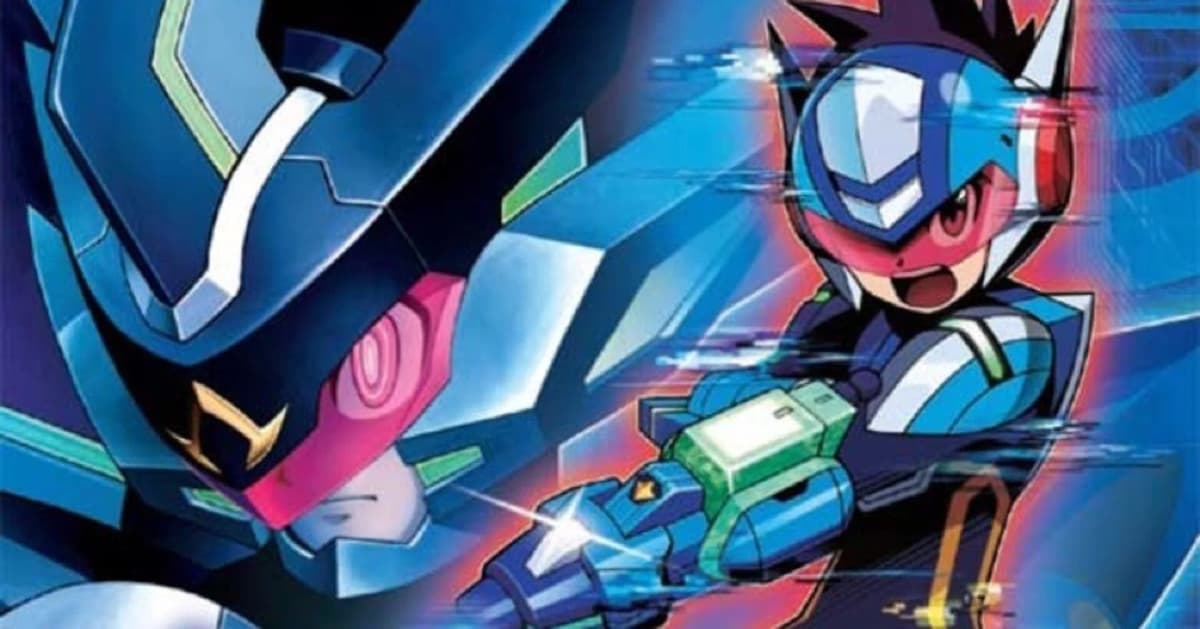
I went into Mega Man Star Force: Legacy Collection expecting a comfy nostalgia trip and not much more. These were the “other” DS Mega Man RPGs back in the day – the ones I always meant to play after Battle Network and somehow never did. A few late nights with the Legacy Collection later, closing in on the end of the first game, I’ve had to eat a lot of my assumptions.
This doesn’t just feel like a preservation project. The way Geo Stelar’s story is framed, the subtle character work in his friendships, and the stripped-down but surprisingly sharp combat all click together in a way that honestly hits harder in 2026 than I ever expected from a DS-era spin-off.
It helps that Capcom has wrapped all three DS titles (and their multiple versions) into one neat package on modern platforms, with optional boosts and tweaks that smooth out most of the handheld-era friction without gutting the original design. The result is a revival that manages to feel both faithful and oddly fresh.
Key Takeaways
- Geo Stelar’s character arc is the star: his isolation, grief, and awkward growth give this trilogy more emotional weight than most Mega Man stories.
- Combat is simple to look at, tricky to master: a stationary, tile-based system that still demands good timing, deck planning, and quick reads.
- Exploration and sidequests hold up: compact areas, meaningful HP upgrades, and small character-driven errands make wandering worth it.
- Quality-of-life options are generous but optional: encounter sliders, speed boosts, and power buffs exist, but you can ignore them for a pure, DS-authentic run.
- A strong preservation effort: all seven original version variants, galleries, music, and modern screen layouts make this a definitive Star Force package.
- Preview verdict: if the second and third games maintain this level, this could quietly become the best Mega Man spin-off collection yet.
Geo Stelar’s Lonely Little World Hits Harder Than Expected
My first real surprise was how quickly Geo Stelar got under my skin. Mega Man as a series has done “stoic hero” and “earnest kid” plenty of times, but Geo is different. When we meet him, he’s not a plucky savior – he’s a depressed, shut-in middle schooler whose dad vanished in space, and he’s basically given up on the whole “normal life” idea.
He skips school. He avoids people. His mom has reached that heartbreaking point where she’s stopped pushing him. That’s the baseline when the alien FM-ian who becomes “Mega” crashes into his life and, through a mix of irritation and necessity, fuses with him to create this era’s Mega Man.
The premise sounds like standard anime fare, but living with it over hours instead of in a trailer reel shifts the tone. Geo’s reluctance isn’t a one-scene gag. He doesn’t instantly relish being a hero or embrace his powers. He drags his feet, he complains, he withdraws. And slowly, beat by beat, the game nudges him toward opening up – not just to Mega, but to the kids around him and the wider world.
I found myself way more invested in those small conversations than I expected from a DS-era Mega Man RPG. A throwaway side errand to help a classmate with a problem felt meaningful because it’s framed as one of Geo’s first genuine attempts to re-engage with other people. That context turns what could’ve been simple “go here, fix that” quests into little emotional footholds.
Geo’s dynamic with Mega sells it. Mega is gruff, sarcastic, and impatient; Geo is wounded, stubborn, and scared. Their back-and-forth has an almost buddy-cop rhythm, but underneath the jokes you can feel Geo slowly trusting someone again. By the time I hit late-game chapters of the first title, I was more interested in where their relationship was going than in the overarching alien conflict.
I’ve liked stories in Mega Man Zero and some of the darker Battle Network beats, but Star Force might be the most grounded I’ve seen this universe handle a kid dealing with loss. It’s still light and approachable, but the emotional throughline feels unusually honest for the series.
A Combat System That Looks Simple, Then Starts Smacking You Around
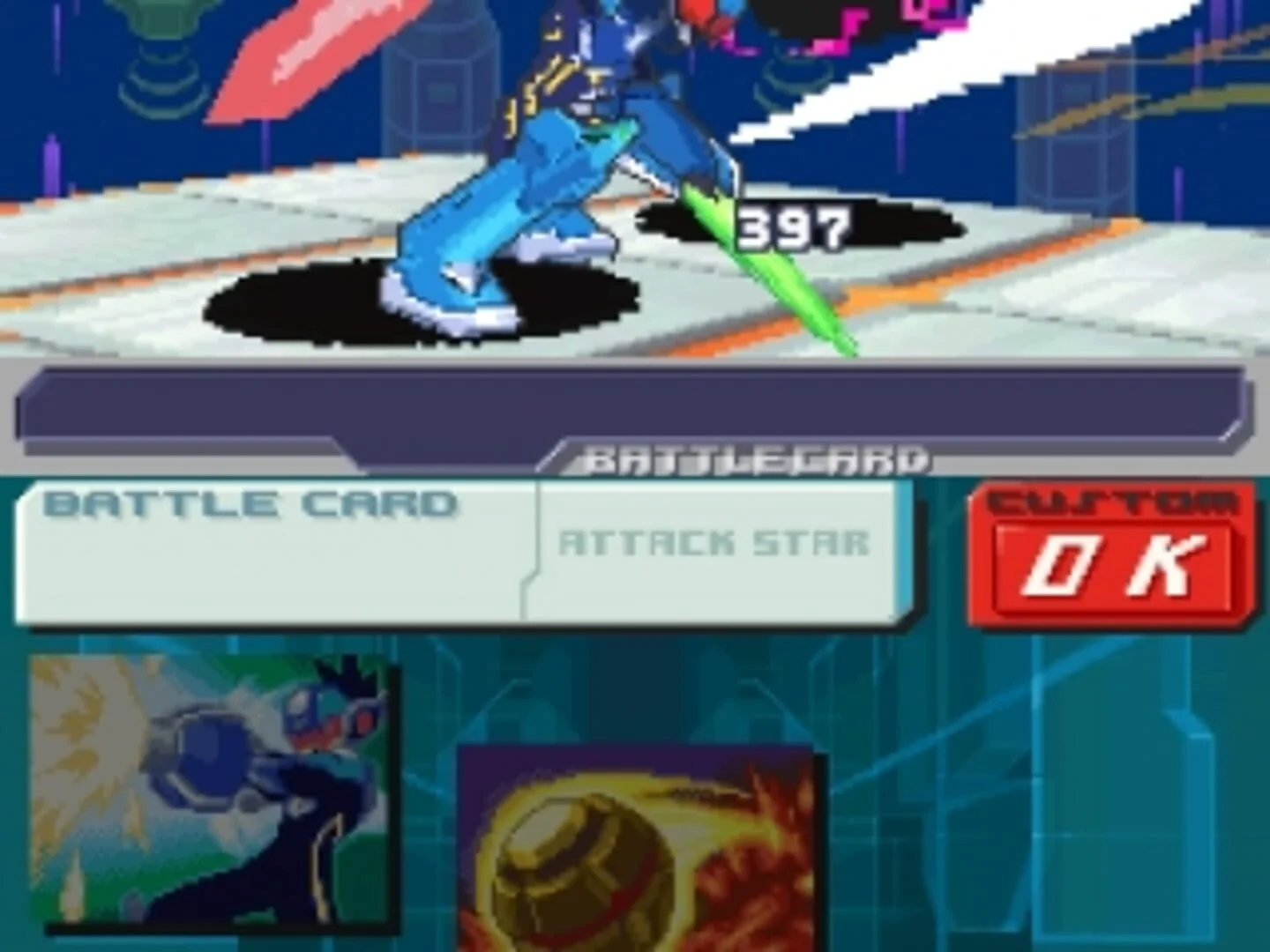
On paper, Mega Man Star Force’s combat sounds like a stripped-down version of Battle Network. You still have a “deck” of Battle Cards instead of chips. You still fight on a tiled field. But instead of dancing around a 3×3 grid from a side view, you’re planted on a three-tile line at the back, looking directly at enemies in pseudo-3D.
When I first saw this again on a big screen, I thought, “Oh, this is going to be so much more basic.” You can only sidestep left and right along your back row and occasionally duck behind cover; enemies hop between tiles in front of you, lobbing attacks your way. It’s a little like being stuck at the end of a narrow corridor, trying to read tells and counterattack as waves of weird virus-creatures rush you.
In practice, that limited movement pushes all the tension into timing and deck building. You’re constantly juggling:
- Reading enemy patterns fast enough to slide out of danger at the last second.
- Picking the right Battle Cards from your random draw – you can only chain certain compatible types at once, which forces improvisation.
- Saving or burning strong cards based on whether you think a tougher encounter is around the corner.
- Going for counters by tagging an enemy right as they’re about to attack, which is both risky and deeply satisfying.
The first hour or two lulled me into thinking I could autopilot most fights. Then I walked into a boss in a new area with a slightly off-beat projectile rhythm, misread a couple of attacks, drew the wrong set of cards, and got absolutely deleted. That was the moment I started respecting how nasty this system can be when you’re not paying attention.
There’s still randomness – the order your cards come up can make a big difference – but it rarely felt unfair. When I died, it was usually because I got greedy trying to squeeze in one more charge shot instead of dodging, or I didn’t adjust my folder (deck) to match a new set of enemy types. Star Force rewards you for putting in that tiny bit of prep: swapping in multi-hit cards for shielded enemies, equipping line attacks when the game starts pairing foes in columns, and so on.
If you loved Battle Network’s mix of action and deck-building, Star Force lands in a similar “sim-action RPG” pocket, just with a different flavor of stress. Instead of doing graceful grid-dancing, you’re playing high-speed bullet-dodging defense from the back row. I found myself just as hooked – maybe more, because I wasn’t trying to mentally be in nine places at once.
Exploration and Sidequests: Compact, But Weirdly Addictive
Outside of combat, Star Force is very much a product of DS-era design – in ways that mostly work in its favor. Areas are small, interconnected pockets of town streets, school corridors, rooftops, and “wave roads” – those digital pathways Geo can access by transforming into Mega Man and slipping into the invisible EM world layered over reality.
The loop goes something like this: talk to people, catch wind of a problem, hop into the wave world, fight EM viruses, poke around for items and HP upgrades, dive back out to see how that small change affects Geo’s relationships and the wider story. It’s not a sprawling open world, but the density is good. There’s almost always some little reward for taking the long way around a screen or checking a suspicious corner.
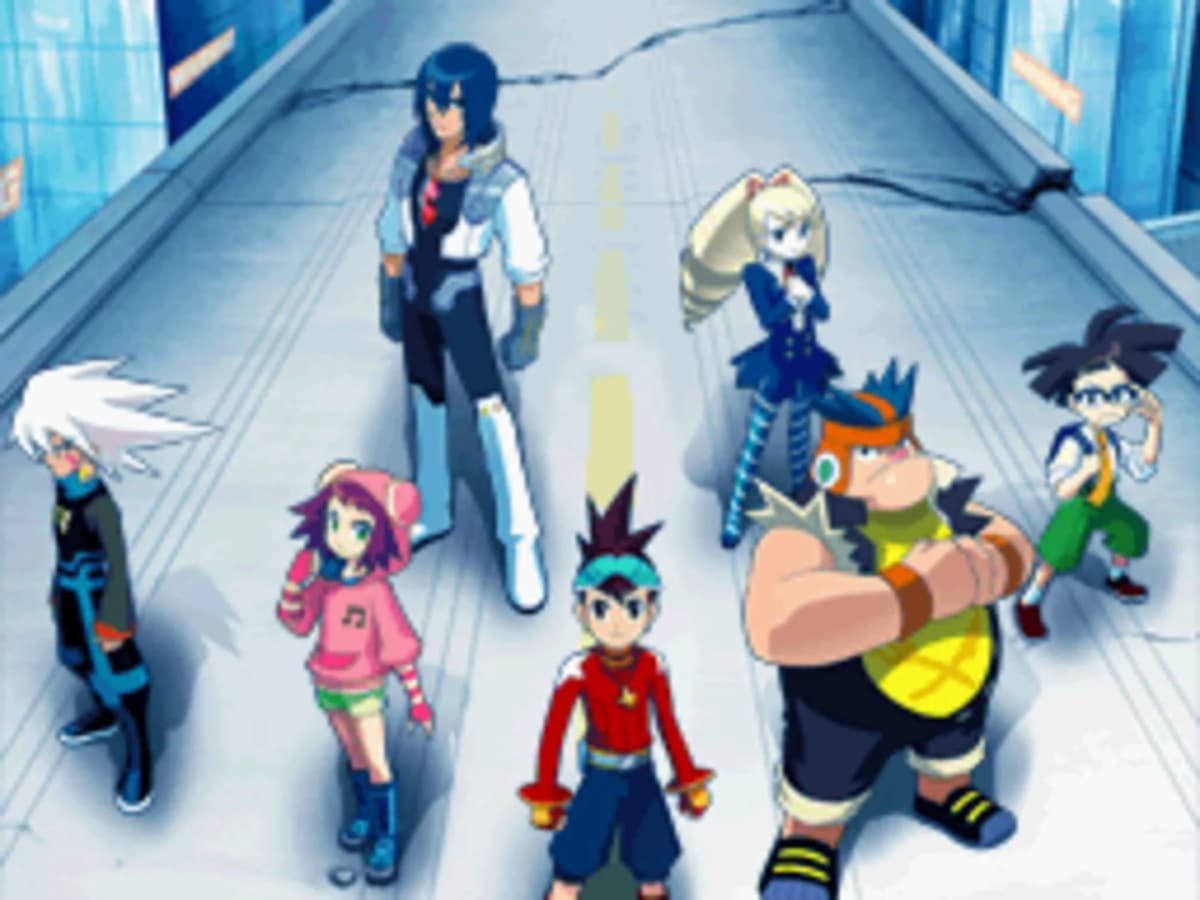
The permanent HP upgrades hidden in odd spots give that classic RPG satisfaction – the “I knew there’d be something tucked back here” feeling. I caught myself doing full sweeps of areas I’d technically cleared just because I didn’t want to miss a stray boost. It’s a simple carrot, but it works.
Sidequests lean more toward bite-sized errands than elaborate multi-part sagas, but they’re elevated by how pointed they are about Geo’s growth. Helping a kid deal with a school problem or fixing some electronic snag isn’t just filler; it’s another excuse for Geo to interact, to care, to show up for people despite his instinct to retreat.
My one real gripe so far: you can’t stack multiple sidequests at once. Having to track them down and clear them one by one is pure DS-era friction that the Legacy Collection doesn’t really sand down. It’s not a deal-breaker, but there were a few times I wished I could just load up on errands before heading into an area so I didn’t have to double back.
Quality-of-Life Options: Training Wheels You Don’t Have to Use
Where the Legacy Collection really asserts itself is in how it modernizes the experience without rewriting it. Across the three games and their original version splits, you’re getting the DS RPGs largely intact – but with a toolbox of tweaks you can choose to mess with or completely ignore.
- Encounter rate sliders: you can lower how often random battles trigger if you’re just trying to blaze through story beats, or crank them if you want to grind.
- Speed boosts: options to increase Geo’s movement speed help cut down on backtracking fatigue that would’ve been more noticeable on a modern TV.
- Damage and reward modifiers: you can gently buff your attack power or tweak rewards like zenny (money), making things more accessible without toggling a blunt “easy mode.”
- Autosave and cutscene skip: modern comforts that make retrying bosses or revisiting tricky sections much less punishing.
What struck me is how little I felt compelled to use any of these beyond curiosity. I tried dialing down encounters once just to see how it changed the feel, then promptly set it back because the battle rhythm is part of what I like about Star Force. The collection clearly wants to respect both returning fans who want the original difficulty curve and new players who might just be here for the story and overall vibe.
There’s also the preservation side: multiple screen-layout options to mimic or modernize the old DS dual-screen setup, a toggle between crisp original pixel art and touched-up visuals, and a surprisingly thorough gallery with art, design materials, card illustrations, and full soundtracks from across the trilogy. For a series that never had the mainstream spotlight of classic or X, seeing this much care put into archiving its history is gratifying.
Envie de passer au niveau supérieur ?
Accédez à des stratégies exclusives, des astuces cachées et des analyses pro que nous ne partageons pas publiquement.
Guide stratégique ultime Uncategorized + Astuces pro hebdomadaires
How It Feels on Modern Hardware
I’ve been playing on a modern console hooked up to a big TV, and it honestly took me about five minutes to stop thinking “DS port” and just sink into the game. The tile-based fields and character sprites obviously come from a different era, but the clean lines and bold colors scale up decently. Once you settle on a screen layout you like, your brain fills in the rest.
Being able to reposition the “second screen” info, stretch or pillarbox, and generally tune the presentation helps a lot. What would’ve felt cramped or awkward with a one-size-fits-all upscale is instead… fine. Not stunning, but more than playable, and comfortably readable from a couch distance.
Audio-wise, the chiptune-style tracks and battle effects have that unmistakable DS timbre, but they hold up aesthetically. The Legacy Collection doesn’t try to aggressively remix or replace them, which I appreciate; the music is part of the texture of this era, and hearing those loops again while paging through the gallery soundtracks is a nice bit of time travel.
I haven’t hit any technical oddities or noticeable hiccups in the build I’ve played. The game launches quickly, loads are brief, and menus are snappy. In a way, that’s the best compliment you can pay a collection like this: it just gets out of the way and lets the original games breathe.
Who This Collection Is Really For
After sinking serious time into the first game and poking into the others, a pattern’s pretty clear. If you fall into any of these camps, Mega Man Star Force: Legacy Collection is squarely aimed at you:
- Battle Network fans who want a new angle: same broad hybrid of deck-building and action, different perspective, and arguably stronger character focus.
- Story-driven Mega Man fans: if you care more about character arcs than raw platforming challenge, Geo’s journey is absolutely worth seeing through.
- RPG players curious about “the other” Mega Man spin-off: this is a clean, modern way to experience three DS RPGs that were easy to miss the first time.
- Preservation nerds and series completionists: seven historical releases rolled into one, plus galleries and full soundtracks, makes this the definitive Star Force set.
If you’re expecting cutting-edge visuals or a complete reinvention of the formula, this won’t convert you. The design DNA is very much 2000s handheld: smaller hubs, random encounters, a bit of repetition. But if you’re okay with that structure and you give Geo’s story room to breathe, there’s a surprising amount of heart and mechanical depth waiting under the surface.
Bottom Line
Going into Mega Man Star Force: Legacy Collection, I half expected to file it mentally under “nice that it exists” and move on. Instead, I’ve ended up genuinely attached to a kid who didn’t want to go to school, didn’t want to be a hero, and slowly, painfully learns to do both anyway – with a grumpy alien riding shotgun.
The combat system, which initially looks like a cut-down Battle Network, blossoms into its own tense, timing-heavy style of action. The exploration loop, while compact, kept me combing through wave roads and side alleys for HP boosts and small character moments. And the Legacy Collection’s optional boosts and display tweaks make it easier than ever to live with DS-era quirks without rewriting what these games are.
As a preview, I’m not slapping a final score on this yet, but based on the first game’s late stages and promising peeks at the sequels, this feels like an 8.5/10 kind of collection in the making – and that’s from someone who barely glanced at Star Force when it was new.
If the second and third entries maintain this level of character work and refine the combat as much as early impressions suggest, Mega Man Star Force: Legacy Collection might quietly become one of the most rewarding ways to revisit – or discover – Mega Man’s RPG side when it launches on PlayStation 4, PlayStation 5, Xbox One, Xbox Series X|S, Nintendo Switch, and PC via Steam on March 27, 2026.
TL;DR
- What it is: A compilation of the entire Mega Man Star Force DS trilogy (including all seven original versions) with modern presentation options and quality-of-life tweaks.
- Why it stands out: Geo Stelar’s introspective, isolated character arc and his evolving bond with Mega give this spin-off more emotional weight than most Mega Man stories.
- Combat feel: You’re locked to the back row of a tiled field, dodging and countering in real time while playing the odds with a Battle Card deck – simple layout, surprisingly punishing when you slip up.
- Exploration: Compact maps, meaningful HP upgrades, and character-driven sidequests make short loops feel satisfying, even if quest stacking is annoyingly limited.
- Modern upgrades: Encounter sliders, movement speed boosts, damage/reward modifiers, autosave, cutscene skip, screen-layout options, and a big art/music gallery – all optional, all helpful.
- Early verdict: A respectful, thoughtfully tuned revival that makes Star Force feel relevant again. For fans of Battle Network-style RPG action or strong character stories, this Legacy Collection is absolutely on the “watch closely” list.