
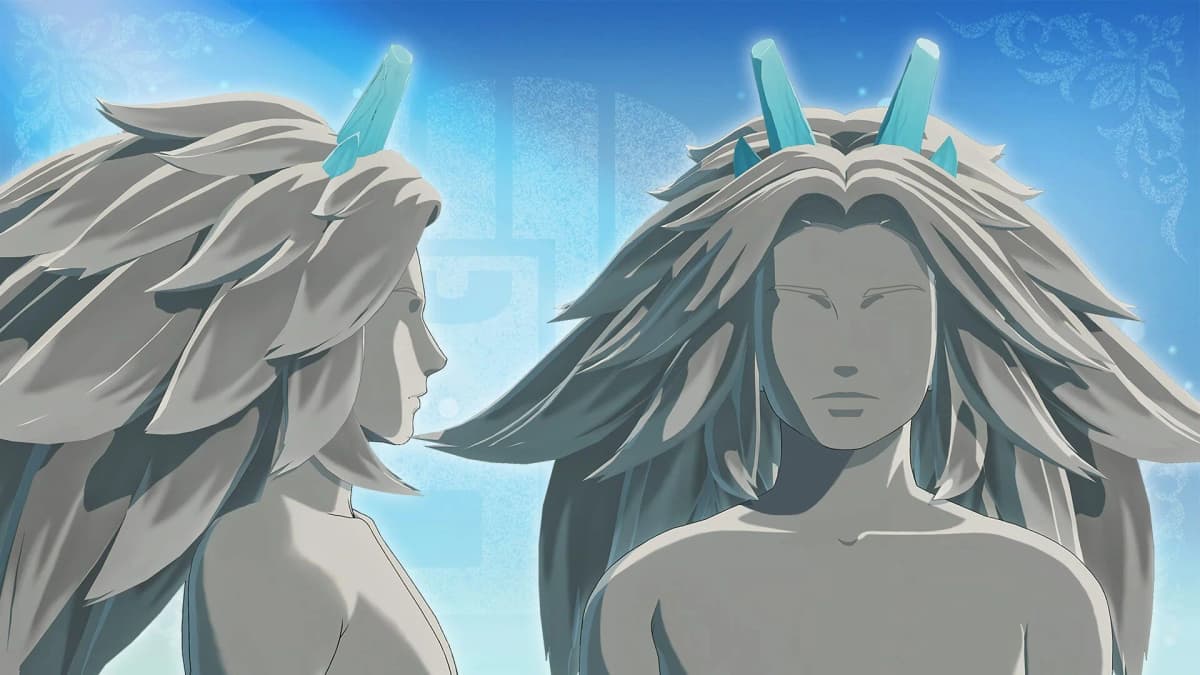
Monster Hunter Stories 3 review – forte evolução da Capcom
When Monster Hunter Stories 3 Finally Clicked For Me
About twenty hours in, I found myself pinned between a crystal-scarred cliff and an enraged Zinogre, with Vermeil soldiers and Azuria knights clashing in the distance. My Rathalos was on its last legs, my rider’s stamina bar hanging by a thread, and I’d misread the Zinogre’s pattern two turns in a row. A single wrong choice and it was a party wipe.
I queued a technical attack, gambled on a pattern shift, triggered a double attack with my Monstie and shattered the Zinogre’s horn. The camera swung low, anime-style sparks flying, my kinship gauge maxed out, and a fully animated super move played out like a lost Ghibli battle sequence someone convinced Capcom to make interactive.
That was the moment it hit me: Monster Hunter Stories 3 is where this spin-off series finally grows up. The clunky pacing and sleepy combat of the earlier games are mostly gone. In their place is a JRPG that feels confident, focused, and surprisingly sharp both in its systems and its storytelling.
Key Takeaways
- Massive step up from previous Stories games: tighter pacing, more dynamic combat, and a story that actually matters.
- Geopolitical narrative about Azuria and Vermeil gives the world stakes beyond “collect the cool monsters.”
- Semi-linear design cleverly mixes broad open zones with more directed corridors to keep you focused, not lost.
- Egg and ecosystem mechanics make grinding feel purposeful instead of mindless repetition.
- Ghibli-esque art in RE Engine looks gorgeous on Switch 2, though handheld image softness and texture pop-in still appear.
- Best for single-player JRPG fans who like Monster Hunter flavour, not for people chasing co-op hunts.
A Smarter, More Confident Monster Hunter Spin-Off
Capcom has been on a ridiculous hot streak, and Monster Hunter Stories 3 is another quiet flex. Having played the two previous Stories games, I went in expecting the usual: charming monsters, serviceable turn-based battles, and a story that waddles along behind the systems.
Instead, this feels like the team sat down, listed every weakness of Stories 1 and 2, and methodically turned them into strengths. The pacing is sharper. The combat is faster and more expressive. The exploration respects your time. The tone is more mature without losing the Saturday-morning-anime charm.
It’s still not a giant, boundary-pushing prestige JRPG – if you’re expecting a genre-defining epic on the scale of a Persona or a Xenoblade, that’s not what this is. But in its lane, as a Monster Hunter-flavoured, story-forward JRPG, it’s easily the best the sub-series has ever been.
A Political Fairy Tale: Story & Characters
Previous Stories games flirted with big themes but never truly committed. Stories 3 finally picks a lane: it’s a geopolitical fairy tale about two kingdoms circling the drain.
You play as the descendant of the royal line of Azuria, a prosperous kingdom that lives in relative harmony with monsters. Humans search for monster eggs, hatch them, and use their Monsties to safeguard the fragile ecosystem. Across the border lies Vermeil, a realm slowly being consumed by a mysterious crystallisation that petrifies land and people alike.
This creeping disaster pushes Vermeil to desperation, and the two kingdoms inevitably slide into conflict. The twist is that the game doesn’t just treat this as background noise. That war – and the fear behind it – actually drives the plot. You’re not just collecting eggs in a vacuum; you’re moving through a world on the edge of collapse.
Layered on top of that political situation are three personal threads that keep the story engaging:
- The mystery behind your mother’s disappearance.
- The truth about the twin Rathalos whose very existence terrifies entire regions.
- The origin and nature of the crystallisation threatening Vermeil and, eventually, much more than that.
The narrative pacing surprised me. Instead of long stretches of filler, the game leans into cinematic cutscenes – properly directed, RE Engine-powered set pieces that wouldn’t feel out of place in a mid-budget anime film. The Ghibli-like art direction gives even simple exchanges warmth and personality, and the main cast benefits a lot from that.
I wouldn’t call the script revolutionary, but between the political backdrop, the family drama, and the Rathalos myth, I was consistently curious about where things were going next. More importantly: I wanted to see the next scene, not just the next loot drop. That’s new for this series.
Semi-Linear World Design That Actually Works
One of my biggest problems with Stories 2 was its world design: big-ish zones that felt neither like true open worlds nor tightly designed JRPG maps. They were just sort of… there, full of copy-pasted dens you ran through on autopilot.
Stories 3 finds a much better middle ground. It’s not open world. Areas are connected by short loading screens, and even entering cities or monster dens triggers a quick load. On Switch 2, these are fast enough that they never really bothered me, but you never forget you’re moving through a chain of separate spaces.
What matters is how those spaces are structured. The game alternates between:
- Large, open-style regions with side paths, hidden dens, roaming monsters and resource nodes.
- More linear “corridor” sections that guide you tightly through story beats, dungeons or war zones.
This rhythm works. The expansive zones let you breathe, experiment with Monstie traversal abilities and poke around for better eggs. Then the linear stretches snap focus back to the narrative without feeling like you’re being dragged down a hallway for hours.
The RE Engine helps a lot here. Azuria’s medieval cities feel dense and lived in, with towering architecture and oversized props that sell the “fantastical kingdom” vibe. Vermeil’s crystal-scarred landscapes look harsh and sickly in a way that visually explains why its people are so desperate. None of this is technically the most cutting-edge world design on the market, but within the Switch 2’s constraints it does precisely what it needs to do.
Eggs, Ecosystems and a Smarter Grind
The egg system has always been the Stories series’ signature, but in the older games it often devolved into brainless den-farming just to reroll stats. Stories 3 finally attaches it to a clearer sense of purpose.
You still delve into monster dens, grab eggs and hatch new Monsties. The twist is how this ties into ecosystem management and monster ranking in each region:
- Hunt monsters in an area, then release them back into that same ecosystem.
- Doing this repeatedly strengthens that monster species in that zone, raising its rank.
- Once a species reaches Rank S, the eggs you find for that monster become significantly stronger.
In practice, this transforms repetitive grinding into a slow, satisfying investment loop. You’re not just rolling the dice for a better Monstie; you’re nurturing the local ecosystem so that, eventually, the eggs you pull are genuinely worth your time.
This system feeds directly into combat: better-ranked Monsties with superior stats and genes give you a noticeable edge against tougher bosses. It also scratches that Monster Hunter itch of studying a species, hunting it repeatedly, and reaping long-term rewards, but in a way tuned to JRPG progression instead of gear checks every hunt.
Is there still grind? Absolutely. Some of the late-game checks, especially when story bosses suddenly spike in difficulty, will push you to farm materials, eggs and experience. But compared to earlier entries, the grind is:
- More goal-oriented (raising ranks, targeting specific builds).
- Better paced (spikes feel like challenges, not brick walls).
- Supported by smarter systems (faster combat options, clearer upgrade paths).
I never hit that “I’m just doing chores” wall that used to creep in with Stories 2’s den runs. I always felt like I was working toward a concrete upgrade that would noticeably change how my team played.
Combat: From Sleepy Rock–Paper–Scissors to Electric JRPG Battles
The combat overhaul is the single biggest reason Stories 3 works as well as it does. The foundation is familiar: you still have the classic power / speed / technical triangle, with head-to-head clashes rewarding you for predicting enemy behaviour. You still break monster parts, exploit elemental weaknesses, and use those materials to forge better weapons and armour.
What’s changed is the rhythm and expression of each encounter.
Earlier Stories games often made that rock–paper–scissors layer feel slow and stilted, like a mini-game pasted on top of a basic JRPG. Here, Capcom finally cranks the tempo. On Switch 2, with battle speed bumped up, fights snap from decision to consequence in seconds, and animations chain together with an almost fighting-game energy.
Several tweaks contribute to that:
- A new stamina-style resource on top of skill points forces you to think about tempo – you can’t just spam your strongest moves every turn.
- Weapon types feel more distinct, especially the long sword, which rewards careful timing and stance management.
- Your allies, both human and Monstie, have noticeably smarter AI, lining up double attacks and exploiting weaknesses without you micromanaging every move.
- Double attacks, kinship skills and part breaks are framed with punchy, anime-inspired camera work that sells the impact.
It’s still turn-based, and it’s still readable enough for younger players to follow, but the sensation is very different now. You feel like you’re outplaying monsters in a tug-of-war of tempo and prediction rather than just chipping away at a big health bar.
The difficulty curve is mostly fair. Regular encounters are breezy once you understand patterns, but larger monsters and story bosses can absolutely flatten you if you sleep on gear upgrades or ignore mechanics. That includes a few memorable “gear check” fights where I had to step away, retool my Monsties and armour, then come back smarter rather than just grinding five extra levels.
For me, that’s the sweet spot for a JRPG: demanding enough to stay interesting, but not so punishing that every session becomes a spreadsheet.
Envie de passer au niveau supérieur ?
Accédez à des stratégies exclusives, des astuces cachées et des analyses pro que nous ne partageons pas publiquement.
Guide stratégique ultime Uncategorized + Astuces pro hebdomadaires
Visuals & Performance on Nintendo Switch 2
If someone told me ten years ago that RE Engine would be powering a Ghibli-flavoured Monster Hunter JRPG on a Nintendo handheld, I’d have laughed. Yet here we are, and it largely works.
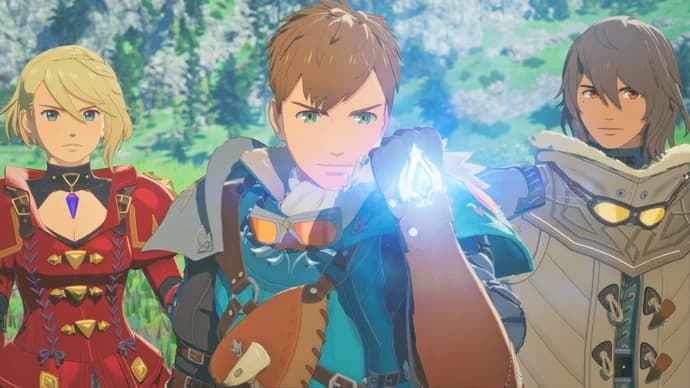
Stories 3 leans hard into the “playable anime” fantasy. Character designs have that soft, expressive, almost Ni no Kuni-like quality. Environments are full of oversized props and bold silhouettes rather than raw texture detail, which is a smart fit for the hardware. The result is a world that looks cohesive and charming, even if you stop and stare at the ground textures in an open field and notice they’re a bit simple.
On Nintendo Switch 2, where I spent most of my time:
- Docked mode looks impressively clean for a cross-gen JRPG, with strong colours and surprisingly large draw distances in the main zones.
- Handheld mode is softer – you’ll notice a slight blur and reduced clarity, especially in foliage and distant objects.
- There are occasional instances of texture pop-in and slower texture loading when entering new areas.
- Frame pacing can wobble during busy scenes or dense towns, but I rarely saw it tank hard enough to affect play.
- Loading times, even when hopping between overworld, cities and dens, are quick enough that the constant transitions don’t grate.
This isn’t a technical showcase on the level of Capcom’s own big-budget action titles, but within its ambitions – a mid-scale JRPG that needs to run on Switch and other platforms – it’s a lovely piece of work. The cutscenes, especially, are where the RE Engine + Ghibli aesthetic really pays off. Those sequences carry a lot of the emotional weight, and they look great on a TV or the Switch 2 screen.
What Doesn’t Quite Land
For all my praise, Monster Hunter Stories 3 isn’t perfect, and a few choices will rub some players the wrong way.
- No multiplayer focus: Earlier Stories entries leaned more into co-op and PvP options. This time the game is very much a single-player-first JRPG. Personally, I preferred the focus, but if you loved running dens with friends, that absence will sting.
- Grind spikes still exist: While the new systems make grinding more purposeful, there are late-game stretches where the game abruptly asks, “So, how much time do you really have?” If you’re allergic to any kind of repeat hunting, consider this a warning.
- Side quests are pretty vanilla: Fetch three of this, hunt two of that, go talk to this NPC. The main story is strong enough that it never bothered me, but side content is clearly not where the creativity went.
- Not truly open-world: The semi-linear structure works, but if you’re expecting a seamless, giant map to roam, you won’t find it here. This is closer to a modern, area-based JRPG than an exploratory sandbox.
For me, these are manageable trade-offs for how much Capcom has tightened the core experience. But they’ll matter depending on what you want from a Monster Hunter spin-off.
Who Monster Hunter Stories 3 Is Really For
After dozens of hours with the game, it’s pretty clear who’s going to get the most out of Stories 3, and who might bounce off.
- Perfect fit if you:
- Enjoy JRPGs with turn-based combat and light monster-collecting.
- Like the Monster Hunter universe but have always found the mainline games too stressful or mechanical.
- Appreciate anime/Ghibli-style storytelling with political undertones and family drama.
- Play primarily on Nintendo Switch 2 and want something that shows what the system can do outside of pure action games.
- Might not be for you if:
- You’re here mainly for online co-op or PvP – that’s not the focus this time.
- You have zero tolerance for any grind, even when it feeds into progression meaningfully.
- You expect sprawling, truly open-world freedom from everything you play.
In other words, this is a game for JRPG fans first, Monster Hunter fans second. If you’re both, you’re exactly the player Capcom had in mind.
Bottom Line: Capcom Finally Gets Stories Right
Coming from the earlier Stories entries, Monster Hunter Stories 3 feels like the moment the series clicks into place. The team has clearly internalised what didn’t work – the dragged-out pacing, the lifeless grind, the story that never quite went anywhere – and rebuilt around a tighter, more purposeful vision.
You get a politically tinged narrative that actually matters, combat that’s fast and expressive, semi-linear maps that respect your time, and an egg/ecosystem system that turns repetition into strategy rather than busywork. Wrap all that in a Ghibli-meets-Monster-Hunter aesthetic rendered in RE Engine, and you’ve got a JRPG that feels far from experimental spin-off territory. It feels confident.
It’s not a genre-redefining masterpiece, and it doesn’t need to be. It’s a rock-solid, characterful JRPG that leverages the Monster Hunter identity without being shackled to mainline expectations. On Nintendo Switch 2 in particular, it’s also a reassuring sign that Capcom knows exactly how to get the most out of the hardware early in its life.
Rating: 8.5 / 10. A big step forward for the sub-series and an easy recommendation for JRPG fans who want something familiar with a distinct flavour.
TL;DR
- What it is: A turn-based JRPG spin-off of Monster Hunter with a stronger political story, faster combat and a Ghibli-esque RE Engine presentation.
- What it does best: Turns previous weaknesses (slow combat, unfocused story, dull grind) into strengths through smart systems and better pacing.
- How it looks on Switch 2: Colourful, cinematic and generally smooth, with minor frame pacing hiccups, softer handheld image and occasional texture pop-in.
- Time commitment: Roughly 35–40 hours if you mainline the story, easily 50–60+ if you obsess over eggs, ranks and perfect Monstie teams.
- Who should play: Anyone who likes JRPGs and Monster Hunter’s world, and is happy with a primarily single-player adventure.
- Core verdict: Not the most ambitious JRPG out there, but a seriously polished, genuinely fun evolution that finally realises the promise of Monster Hunter Stories.